Reindustrialisation
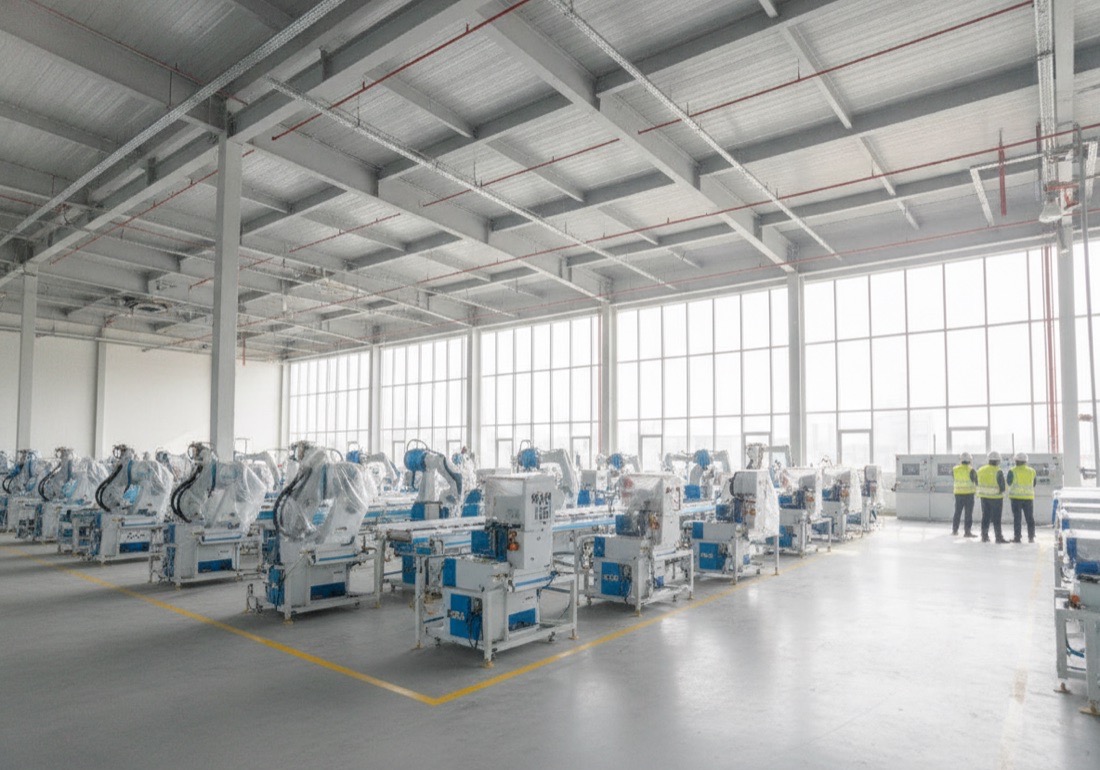
Reindustrialisation describes the effort to bring industrial manufacturing, critical intermediate goods and value chains back closer to Europe – whether through relocation (reshoring), through shifting to friendly countries (nearshoring/friendshoring) or through building entirely new capacity. It is about more resilient supply chains, strategic autonomy and the question of which production a continent wants to keep within its own reach. For you as an investor this is not a single sector but a cross-cutting theme that touches mechanical engineering, semiconductors, chemicals, batteries and automation. This page helps you frame the field – without any recommendations.
Why the topic matters in the DACH region
The German-speaking region is industrially strong and, at the same time, deeply interwoven with global supply chains. For decades it was seen as efficient to source intermediate goods, raw materials and entire production steps wherever they were cheapest – often in distant regions with few alternative suppliers. The disruptions of recent years have shown how vulnerable this dependence can be, for example in semiconductors, in certain chemical precursors or in battery cells and their raw materials. At the European level there is therefore a debate about industrial policy and strategic autonomy: which capabilities should Europe keep in-house so as not to become unable to act with every geopolitical tension? It is precisely in this tension – global integration, vulnerability and political will to shape things – that many smaller providers from the region operate.
What drives the topic
Several forces work together, without this adding up to a guaranteed upward trend. First, geopolitics: trade conflicts, export controls and the push for independence from single supplier countries move domestic production into focus. Second, EU industrial policy: through instruments such as IPCEI (Important Projects of Common European Interest) and other funding programmes, there are attempts to kick-start capacity in areas like semiconductors or batteries. Third, security of supply: after shortages, many companies now weight robustness more heavily against pure cost optimisation. Fourth, the energy question, since production sites depend on predictable and competitive energy costs. It is important to view these drivers soberly: they describe demand potential and political will, not the earnings situation of any single company.
What to look at in your analysis
For companies in this field, it is worth looking at a few recurring points. How dependent is the business on subsidies and political decisions that can change? How capital-intensive is the build-out – does it require factories, plants and up-front financing before any revenue is generated at all? How long are the construction times and ramp-up phases until new capacity actually produces and earns money? And who really benefits in the end: the loud name from the headline, or rather the inconspicuous suppliers of automation, measurement technology or specialty components? Questions like these are best structured systematically. Our 6-step process gives you a common thread, and the toolkit provides aids to put figures and statements into context.
Risks & pitfalls
Reindustrialisation is a rewarding narrative – and that is exactly a risk. A strong future theme can tempt investors to price in expectations that would only be delivered over many years. Dependence on politics is central: if funding programmes are cut, delayed or realigned, the basis of a project can shift. High capital requirements (capex) tie up funds for the long term and raise the stakes if utilisation or prices fall short of assumptions. On top of that comes execution risk: large industrial projects get delayed, become more expensive, or later deliver less than planned. Watch whether growth comes from durable demand or from a one-off funding window – and whether the valuation already prices in a story that still has to be proven.
This page is for educational purposes only. It deliberately names no specific companies or people, contains no buy or sell recommendation, no price targets and no investment advice. You make decisions independently and on the basis of your own research.