Mechanical engineering
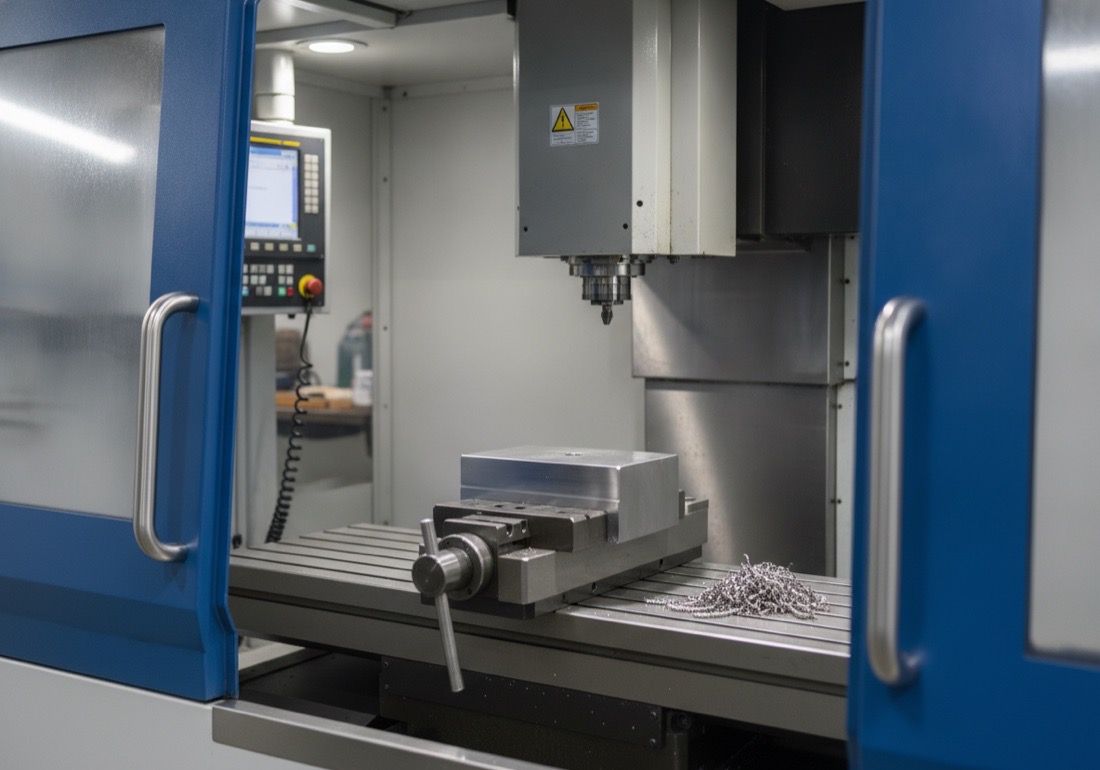
Mechanical engineering covers the manufacture of machines, plants and the components behind them: machine tools that mill, drill or turn metal, complete production lines for other industries, capital goods such as pumps, drives or packaging technology, and countless parts that end up inside other companies' products. It is a sector that rarely builds what finally sits on a shelf — instead it builds the equipment other companies need to make their own products in the first place. For you as a beginner, it is a field full of niches where many small, highly specialised firms operate.
Why this matters in the DACH region
Mechanical engineering is seen as the heart of the German Mittelstand and is deeply rooted in the economies of Germany, Austria and Switzerland. Over decades a dense landscape of export-driven, often family-shaped companies has formed here, many of which rank among the world's best in their particular niche — frequently called "Hidden Champions", because hardly anyone outside their industry knows them, yet in their speciality they are market leaders. This rests on a broad engineering base, a close link between vocational training and industry, and a long tradition in plant construction and precision manufacturing. That is exactly why you find so many small caps in the DACH region whose business model revolves around a single, deeply mastered technology. For you as a learner, that means plenty of examples through which business models, cycles and metrics can be studied.
What drives the theme
Demand in mechanical engineering depends heavily on how much other companies worldwide invest in their own production — so-called industrial capex. When the economy runs well and factories add capacity, new machines are ordered; when the environment cools, investments are postponed. Longer-term drivers include increasing automation and robotics, the replacement and modernisation of ageing equipment, and rising demands on efficiency and energy use. An often underestimated element is the business of service, maintenance and spare parts: a machine, once sold, runs for many years and generates recurring revenue over its lifetime. These aftermarket streams can be steadier than the fluctuating sale of new machines.
What to look at in your analysis
With mechanical engineering it pays to understand the cyclicality first: how strongly do revenue and earnings swing with the global investment climate, and how did the company hold up in past downturns? A look at the export share shows you which regions the firm depends on and how strongly exchange rates or trade conflicts feed through. The order backlog — the bookings still to be worked off — gives a hint about visibility for the coming months. Pay attention to how large a share recurring revenue from service and spare parts represents, since it smooths the cycles. And check the exposure to individual large markets such as China, which for many machine builders is both a growth engine and a concentration risk. Our 6-step process and the matching toolkit show you how to work through such points in a structured way.
Risks & pitfalls
The sector's most defining trait is its pronounced cyclicality: because machines are large investments, orders often drop quickly and sharply in downturns, while recoveries come with a delay. The heavy dependence on exports and on individual sales markets such as China amplifies this — political tension, tariffs or weaker foreign demand hit the sector directly. On top of that comes intense competition, including from providers in lower-cost countries, which can weigh on prices and margins. Finally, mechanical engineering is capital-intensive: development, manufacturing and the pre-financing of large orders tie up funds, which tests financial resilience in weak phases. The metrics and stories of individual companies can differ widely — blanket judgements quickly lead you astray here.